Vocabulario Pre-A1 Starters: La escuela
Cambridge Pre-A1 Starters tiene 40 palabras de la escuela. Toca una imagen para escuchar la palabra.
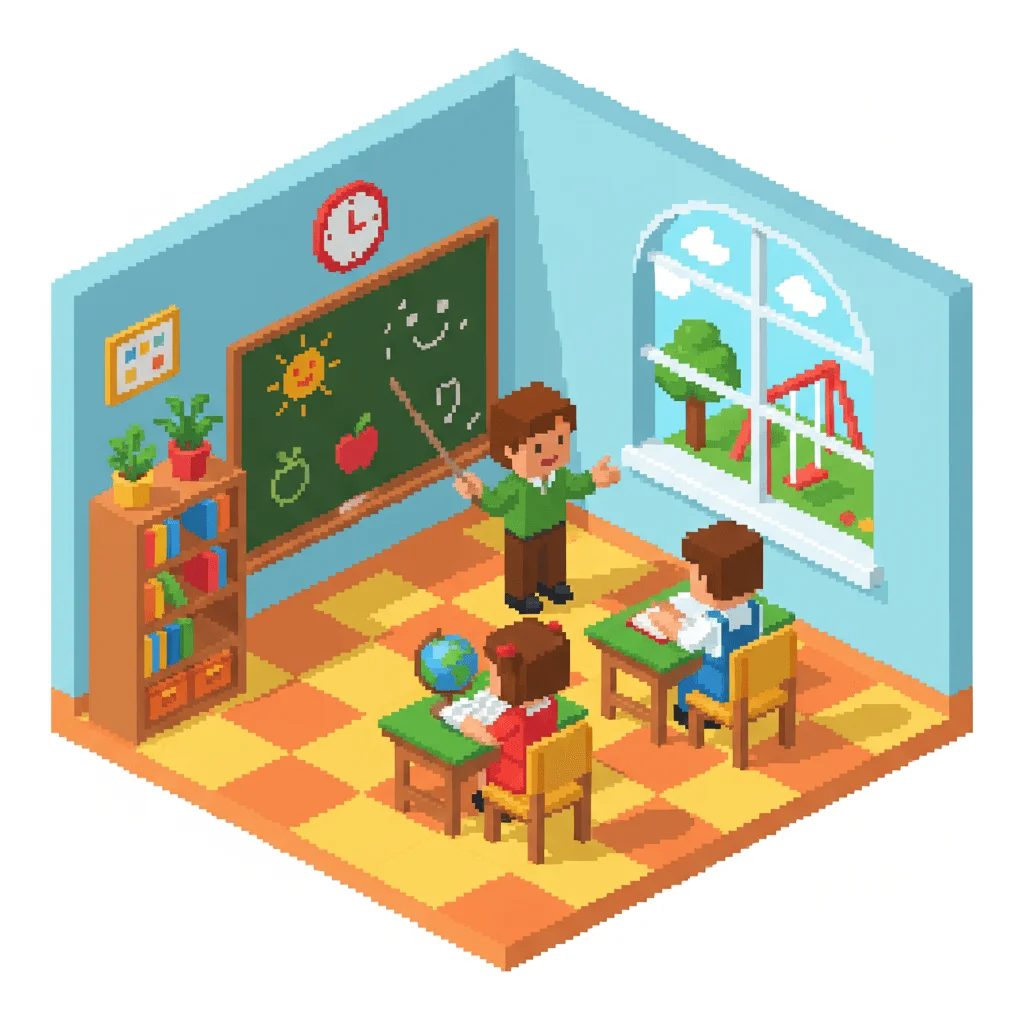
Nuevas en Pre-A1 Starters: 40 palabras
- alphabetnoun
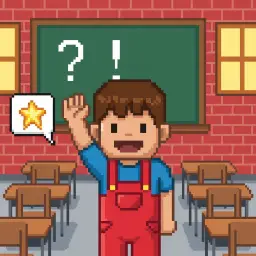 answernoun, verb
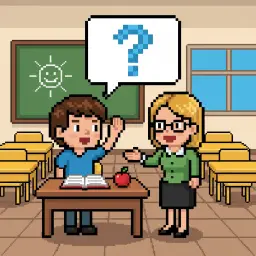 askverb
- boardnoun
- classnoun
- classroomnoun
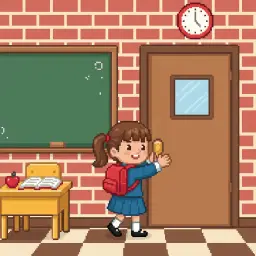 closeverb
- adjective
- crayonnoun
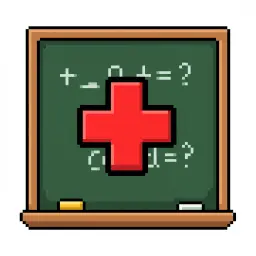 crossnoun, verb
- adjective, noun
- erasernoun
- examplenoun
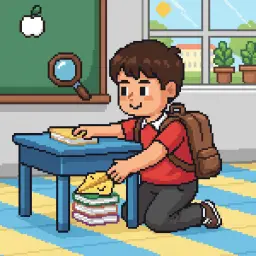 findverb
- keyboardnoun
 learnverb
- lessonnoun
- linenoun
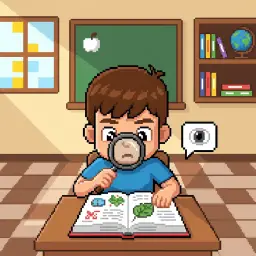 lookverb
- mousenoun
- numbernoun
- openadjective, verb
- pagenoun
- paintingnoun
- partnoun
- pennoun
- pencilnoun
- posternoun
- questionnoun
- rulernoun
- schoolnoun
- sentencenoun
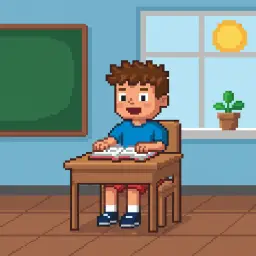 sitverb
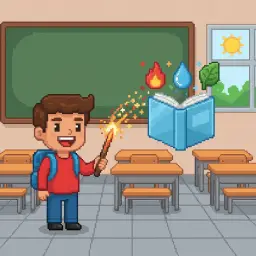 spellverb
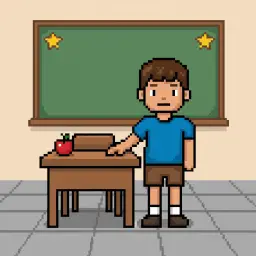 standverb
- teachernoun
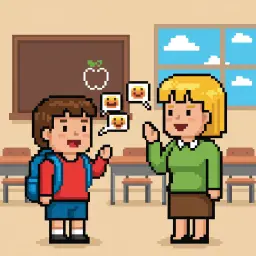 tellverb
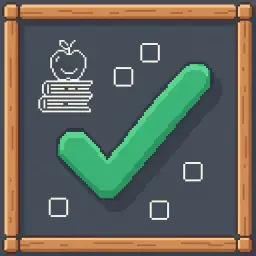 ticknoun, verb
 understandverb
 writeverb
Cómo aparecen las palabras de la escuela en el examen
En Reading & Writing Parte 1, tu hijo ve 5 imágenes de objetos y marca si una frase como 'This is a ball.' es correcta. Los objetos son palabras cotidianas: juguetes, animales, comida, cosas del colegio, ropa y cosas de la casa.
Guía de Reading & Writing Parte 1 →Significados y oraciones de ejemplo (40 palabras)
- alphabet
- (noun)
- Letters used to write words.
- I know the alphabet song.
- answer
- (noun, verb)
- A reply to a question.
- I know the answer to this problem!
- ask
- (verb)
- You say to get something.
- I ask my mum for juice.
- board
- (noun)
- Flat piece of wood or plastic.
- I write on the board at school.
- class
- (noun)
- A group of students learn together.
- I like my English class very much.
- classroom
- (noun)
- It is a room for school.
- We learn in the classroom.
- close
- (verb)
- Not far away.
- My house is close to school.
- correct
- (adjective)
- It is right, not wrong.
- My teacher says my answer is correct.
- crayon
- (noun)
- It's a stick to color.
- I use a crayon to draw.
- cross
- (noun, verb)
- Go from one side to the other.
- I cross the street to school.
- English
- (adjective, noun)
- It is a spoken language.
- I learn English at school.
- eraser
- (noun)
- It cleans pencil marks off paper.
- I use an eraser to fix mistakes.
- example
- (noun)
- It shows what something is.
- This is a good example of my drawing.
- find
- (verb)
- To see something you looked for.
- I can find my shoes here.
- keyboard
- (noun)
- It helps you type letters.
- I use the keyboard to write stories.
- learn
- (verb)
- Get knowledge or skill.
- I learn English at school.
- lesson
- (noun)
- Time to learn something new.
- I like my music lesson a lot.
- line
- (noun)
- A long, thin mark.
- I draw a line with my ruler.
- look
- (verb)
- Use your eyes to see.
- I look at the blue sky.
- mouse
- (noun)
- It helps you use a computer.
- I use the mouse to play games.
- number
- (noun)
- It shows how many things.
- I know my phone number.
- open
- (adjective, verb)
- Not closed; you can enter.
- The shop is open today.
- page
- (noun)
- One side of paper in a book.
- I read one page every day.
- painting
- (noun)
- It is art on paper.
- I like the painting in my room.
- part
- (noun)
- A piece of something bigger.
- This is a part of my toy.
- pen
- (noun)
- You use it to write.
- I use a pen in class.
- pencil
- (noun)
- You write with this.
- I use a pencil in school.
- poster
- (noun)
- It is a big picture.
- I have a poster on my wall.
- question
- (noun)
- Ask for information.
- I have a question about my homework.
- ruler
- (noun)
- It helps you draw straight lines.
- I use a ruler for my homework.
- school
- (noun)
- A place for learning things.
- I go to school every day.
- sentence
- (noun)
- Words put together to say something.
- I read every sentence in my book.
- sit
- (verb)
- Rest on your bottom.
- I sit on the chair.
- spell
- (verb)
- Say letters to make a word.
- Can you spell your name, please?
- stand
- (verb)
- Be on your feet.
- I stand up to play games.
- teacher
- (noun)
- A person helps you learn.
- My teacher reads us a story.
- tell
- (verb)
- Say something to someone.
- I tell my mum I love her.
- tick
- (noun, verb)
- A small bug that bites.
- I hate when a tick bites me.
- understand
- (verb)
- I know what it means.
- I understand my homework now.
- write
- (verb)
- Make letters or words using pen.
- I write my name on my book.
Más temas de Pre-A1 Starters



Preguntas de los padres
¿Cuántas palabras de la escuela tiene Pre-A1 Starters?
El nivel Pre-A1 Starters introduce 40 palabras de la escuela, como alphabet, answer, ask. Todas están en esta página con significados sencillos, oraciones de ejemplo y audio para la mayoría.
¿Son estas todas las palabras de la escuela para el examen Pre-A1 Starters?
Sí — Pre-A1 Starters es el primer nivel de Cambridge YLE, así que las 40 palabras de esta página son todo el vocabulario de la escuela que tu hijo necesita para el examen.
¿Es esta la lista oficial de Cambridge?
Esta página está alineada con la lista oficial de vocabulario de Cambridge English Pre-A1 Starters, con definiciones sencillas para niños, oraciones de ejemplo y audio agregados por FlyersEnglish. FlyersEnglish no está afiliado ni avalado por Cambridge; los PDF oficiales están en cambridgeenglish.org.
FlyersEnglish no está afiliado ni avalado por Cambridge. Esta página está alineada con las listas oficiales de vocabulario de Cambridge English; los PDF oficiales están disponibles en cambridgeenglish.org.
Convierte estas palabras en un juego
FlyersEnglish convierte las palabras de la escuela de Pre-A1 Starters en juegos con imágenes y sonido, y te muestra qué palabras ya sabe tu hijo.