A2 Flyers Listening Part 2: Write Words and Numbers
Flyers Listening Part 2 asks your child to fill in a form or notebook page with five missing words or numbers while listening to a conversation. Answers are names, numbers, days or places, and the spelling must be right.
How Flyers Listening Part 2 works
Your child sees a form or notebook page with five gaps — things like a name, a day, a number or a place.
They listen to a conversation that mentions each missing detail in turn.
They write a word or a number into each gap as they hear it.
The recording plays twice, so the second listen is for checking spelling and numbers.
Tips to score higher in Part 2
Practise writing names, days and numbers from dictation — most Part 2 answers are short, factual details like these.
When a name is unusual, the recording spells it out letter by letter, so make sure your child can catch English alphabet letters at speed.
Train neat, quick single-word handwriting; full sentences are never needed and there is no time for them.
Before the audio starts, read the form together and predict what type of answer each gap needs — a number, a day, a word.





Practise for Part 2 with these games
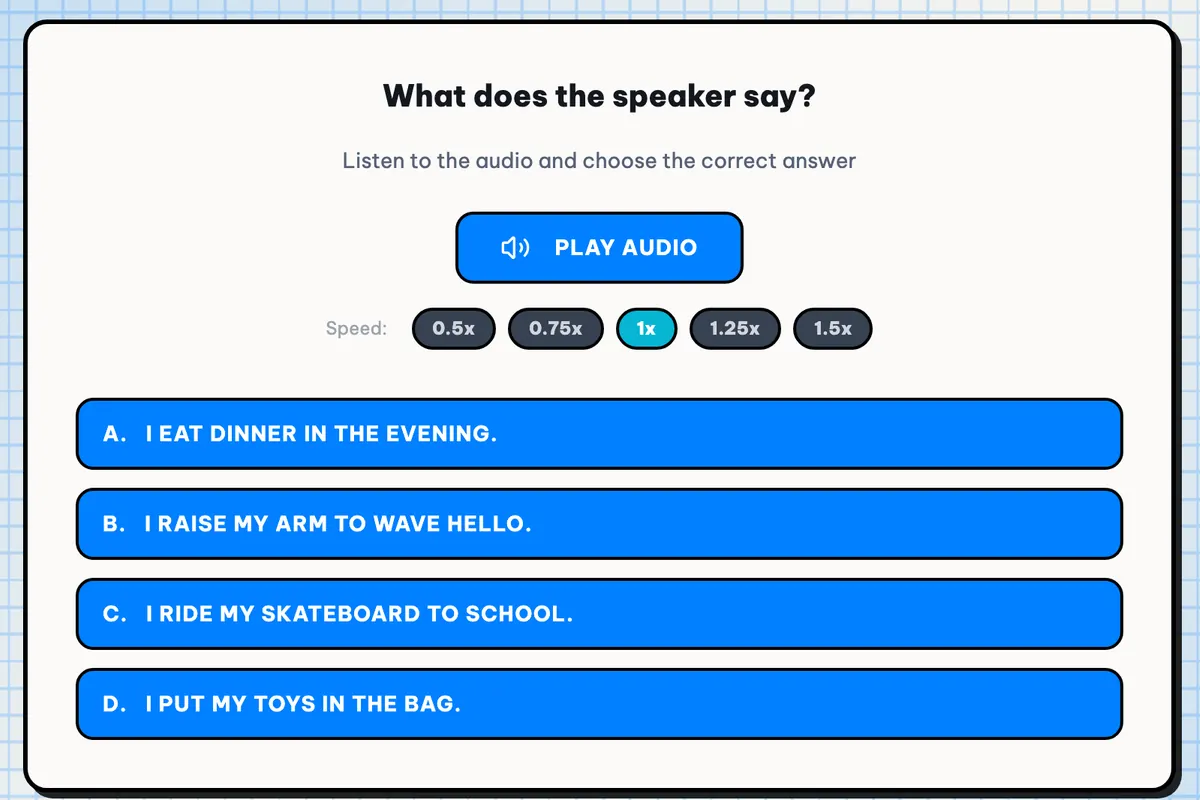
- Listen & Choose
Trains careful listening for the exact detail — names, numbers, places — that fills the gaps on Part 2's form.
Frequently asked questions
Does spelling matter in Listening Part 2?
Yes. Words from the Flyers wordlist are expected to be spelled correctly, and this is the listening part where spelling most often costs marks. Helpfully, unusual names are spelled out letter by letter in the recording, so practising the English alphabet by sound pays off directly here.
Can answers in Part 2 be numbers?
Yes — numbers come up regularly, for things like ages, times, dates or quantities on the form. Writing the digits is fine, and usually safer than spelling the number word. Practise catching numbers at speed, especially pairs English learners confuse, such as thirteen and thirty.
How can we practise form-filling at home?
Play secretary: read out a pretend booking — a name, a day, a time, a place — and have your child fill in a simple form as you speak. Read it twice, just like the exam, and let them check spelling on the second pass. Five minutes a day builds the habit fast.
Is Part 2 harder than the other listening parts?
For many children, yes, because it is the only listening part where they produce writing from sound alone — everywhere else they draw lines, tick boxes or colour. The listening itself is friendly, though: details arrive in the order of the gaps, and the conversation signposts each one.
Last updated: 2026-07-02
Ready to practise Listening Part 2?
Make a free account and your child can start in under a minute. No card needed.