Everything parents need to know about the Cambridge A2 Flyers test — the 2026 format, shield scores, and free games matched to every exam paper.
A2 Flyers is the highest Cambridge Young Learners exam, for children typically aged 9–12. It certifies A2-level English through three papers — Listening, Reading & Writing, and Speaking — about 75 minutes in total, scored with shields rather than pass/fail. Kids can practise the full Flyers wordlist and every exam skill free with the games here.
Flyers is the longest of the three Young Learners tests, with a 40-minute Reading & Writing paper that ends in real story writing. Speaking remains a face-to-face conversation with one examiner.
| Paper | Parts | Questions | Minutes |
|---|---|---|---|
| Listening | 5 | 25 | ~25 |
| Reading & Writing | 7 | 44 | 40 |
| Speaking | 4 | — | 7–9 |
Flyers has no pass or fail. Each paper — Listening, Reading & Writing, and Speaking — earns one to five shields, for a maximum of 15, printed on a Cambridge certificate that never expires. Roughly 10 or more shields, with at least two in every skill, is treated as a strong result and a sign your child is ready to aim for A2 Key for Schools. Fewer shields in one paper simply show where to focus practice next.
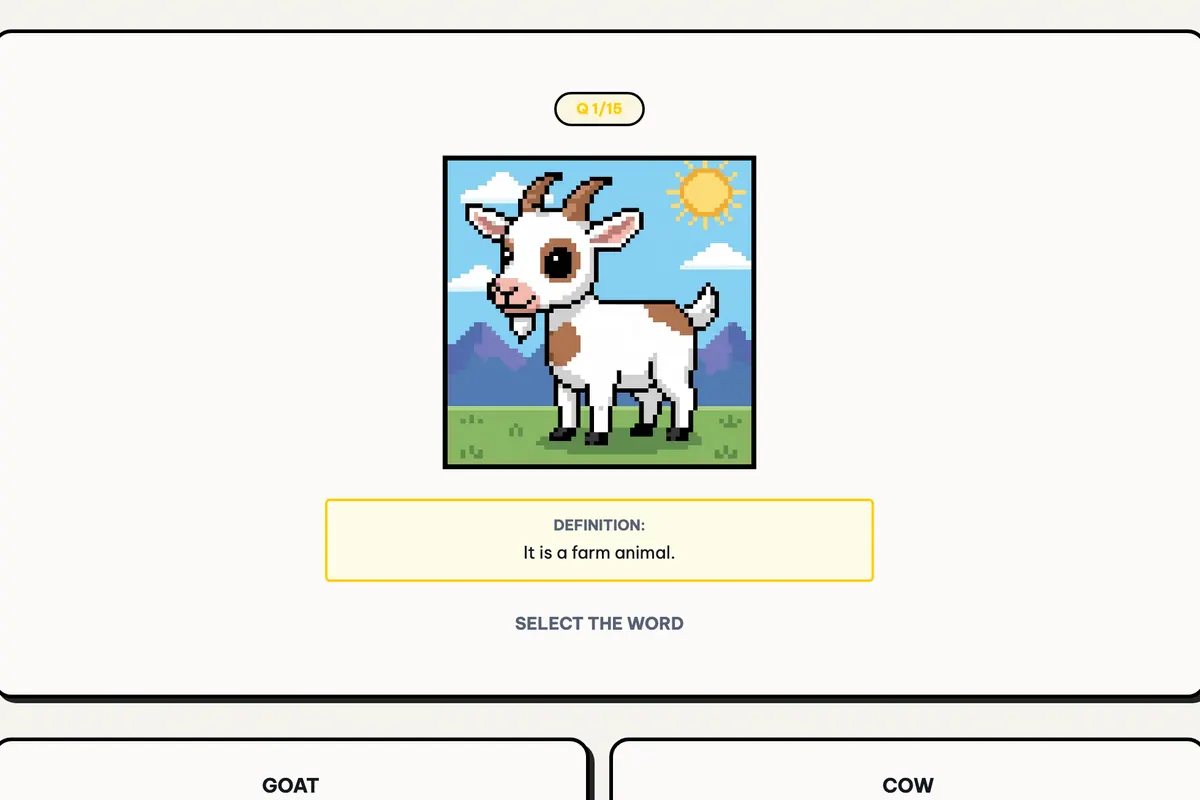
Flyers draws on the largest Young Learners wordlist, and Reading & Writing Part 1 tests it head-on: children match ten definitions to words chosen from a list of fifteen. Listening and Speaking recycle the same words, so a deep, well-spelled vocabulary lifts shields across all three papers.
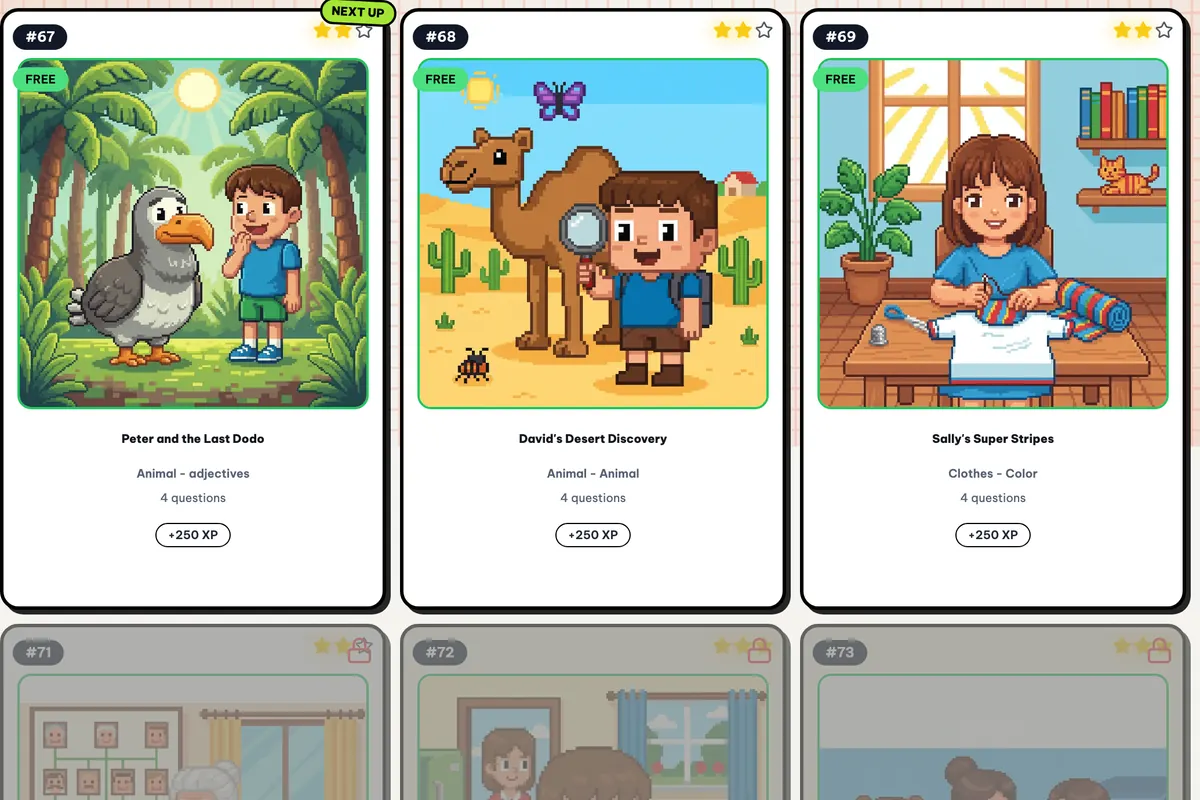
The Flyers floors cover the trickiest YLE words — definitions, pictures and audio together.
Flyers answers only score when they're spelled correctly — train accuracy under time pressure.
Reading & Writing is the big paper: 40 minutes, 7 parts, 44 questions. Part 2 asks children to complete a dialogue by choosing responses from options A–H, Part 3 is a word-box gap fill with a title to choose, Part 4 offers three options per gap, and Part 5 completes story sentences with one to four words. Daily reading in English is the single best preparation.
Pick the right reply from lettered options — the exact skill behind Part 2.
Longer Flyers-level stories with completion questions, mirroring Part 5.
Three-option grammar gaps like Part 4, plus open gaps that prepare for Part 6.
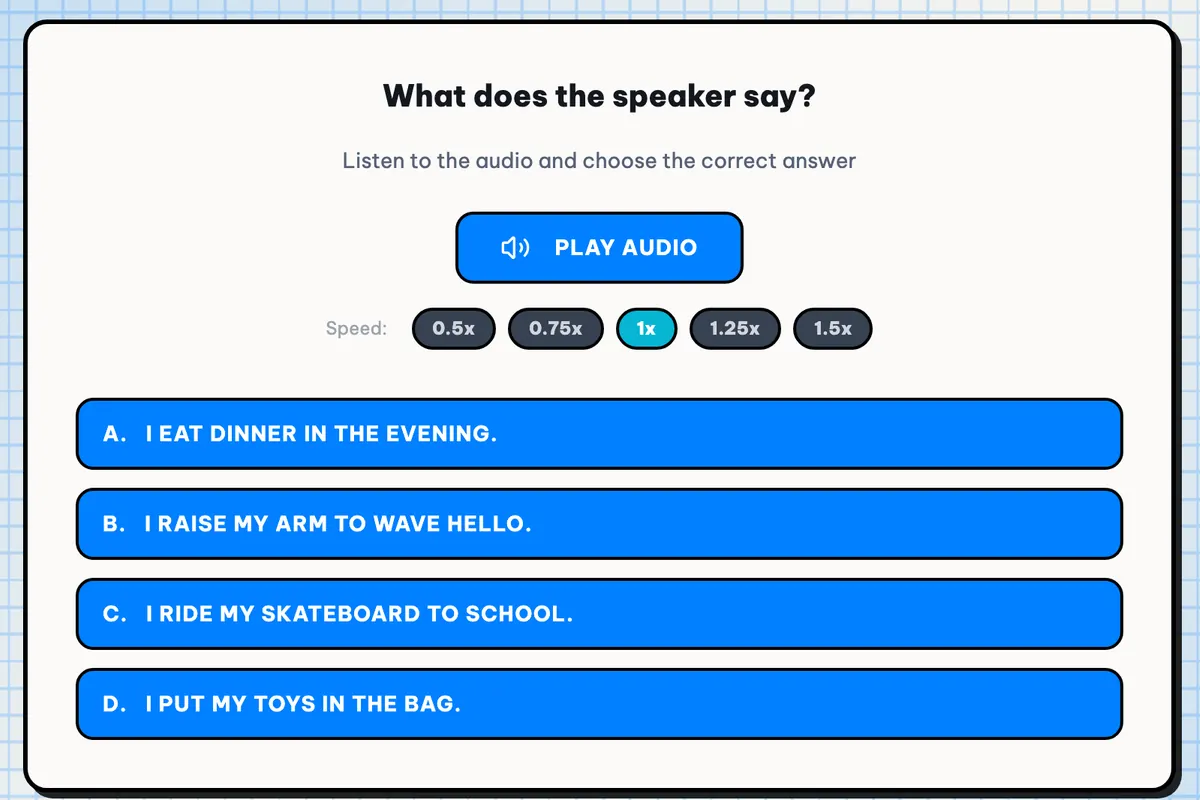
Flyers Listening runs about 25 minutes with 5 parts and 25 questions: matching names to people in a scene, writing words and numbers on a form, matching pictures from a dialogue, three-option picture questions, and a colour-and-write task. Children hear each recording twice, so trained ears and calm note-taking win shields.
High-speed ear training on Flyers vocabulary, names and spellings.
Form-filling and picture choices modelled on Listening Parts 2 and 4.
Follow a dialogue and match speakers to pictures, like Listening Parts 1 and 3.
Flyers is the only Young Learners level with real free writing: Reading & Writing Part 6 asks children to write missing words in a letter or diary with no word list to help, and Part 7 asks them to write a short story based on three pictures. Grammar accuracy and story structure both count.
Write a story from three pictures and get instant AI feedback — the Part 7 task, gamified.
Open gap fills with no word box, just like Part 6 of the real paper.
Build accurate A2-level sentences fast — the foundation under every written answer.
Browse every official A2 Flyers word with pictures, audio and games. The full official wordlist is organised by topic, so your child can close vocabulary gaps one theme at a time.
Browse the Flyers wordlistOr browse the wordlist by topic
Yes. A2 Flyers is aligned with CEFR level A2 — the same level as A2 Key (KET), but with topics, pictures and tasks designed for children. A strong Flyers result shows your child can understand everyday written and spoken English and is ready to work toward A2 Key for Schools.
There is no pass mark — no child fails Flyers. Each paper earns up to five shields, 15 in total. Roughly 10 or more shields, with at least two in every skill, is considered a strong result and suggests your child is ready to prepare for A2 Key for Schools.
About 75 minutes in total. Listening lasts around 25 minutes with 25 questions, Reading & Writing is 40 minutes with 44 questions across 7 parts, and Speaking is a 7–9 minute face-to-face conversation with one examiner. It's the longest of the three Cambridge Young Learners tests.
Flyers is typically taken between ages 9 and 12, often in the final years of primary school. There's no official age requirement — readiness matters more than age. Children usually reach Flyers after a year or two at Movers level, though confident readers sometimes go straight to it.
The natural next step is A2 Key for Schools (KET), followed by B1 Preliminary for Schools (PET). Because Flyers already certifies A2-level English, a child with a strong shield score can usually move into Key for Schools preparation directly, building on the same vocabulary and skills.
It's the biggest jump from Movers. Part 6 asks children to write missing words in a letter or diary with no word list, and Part 7 asks for a short story based on three pictures. Regular short writing practice with feedback — our Story Writing game gives instant AI feedback — makes it manageable.
No. Like all Cambridge Young Learners exams, Flyers has no pass or fail. Every child receives a certificate showing one to five shields per paper, and the certificate never expires. A lower score in one skill is simply guidance on what to practise before moving toward A2 Key.
Speaking is a 7–9 minute face-to-face chat: describing differences between pictures, asking and answering questions, continuing a four-picture story, and personal questions. Daily English conversation helps most — and for structured practice, our tutor marketplace at /find-tutor connects kids with friendly online English tutors.
Last updated: 2026-07-01
Create a free account and your child can start playing Flyers vocabulary, reading, listening and writing games in under a minute — no card required.
Last updated: 2026-07-01