The complete parent guide to the Cambridge A1 Movers test — exam format, shield scoring, and free practice games matched to every paper.
A1 Movers is the second Cambridge Young Learners exam, for children typically aged 8–11 who can already read and write simple English. It has three papers — Listening, Reading & Writing, and Speaking — lasting about an hour in total, and is scored with shields instead of pass/fail. Kids can practise every Movers skill free with the games here.
Movers keeps the friendly three-paper structure of Starters but adds more parts, more questions and real sentence writing. Speaking is still a short one-to-one conversation with an examiner.
| Paper | Parts | Questions | Minutes |
|---|---|---|---|
| Listening | 5 | 25 | ~25 |
| Reading & Writing | 6 | 35 | 30 |
| Speaking | 4 | — | 5–7 |
Movers has no pass or fail. Each paper — Listening, Reading & Writing, and Speaking — is scored from one to five shields, so the maximum is 15. The shields go on a Cambridge certificate that never expires. Roughly 10–11 shields overall is a strong result and a good signal that your child is ready to start preparing for A2 Flyers. A lower shield in one paper simply tells you which skill to play more games in.
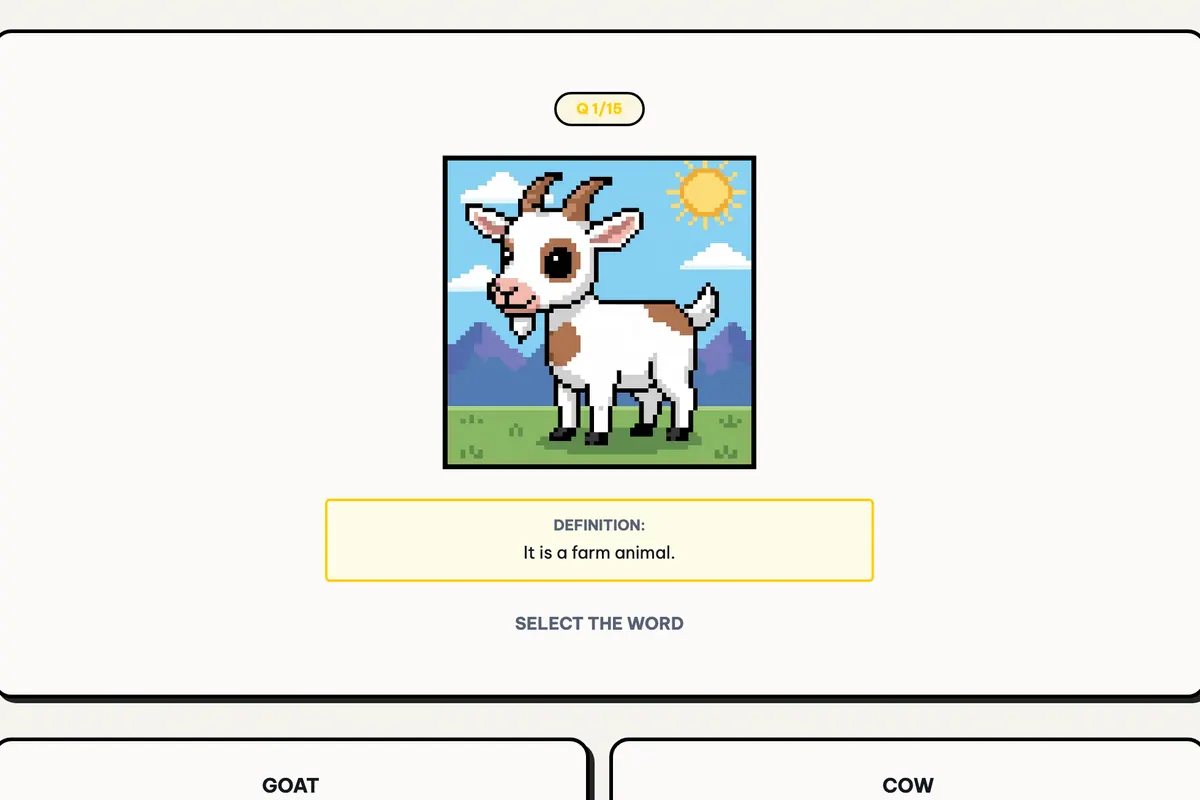
Movers adds new topics on top of Starters — school subjects, health, weather, places and the wider world — all from the official Cambridge wordlist. Reading & Writing Part 1 asks children to match definitions to pictures and copy the word, so both meaning and spelling count. Strong vocabulary is the fastest way to lift shields on every paper.
The Movers floors add school, health, weather and world words — with pictures and audio on every level.
In Part 1 the copied word only counts if it's spelled correctly — drill Movers spelling here.
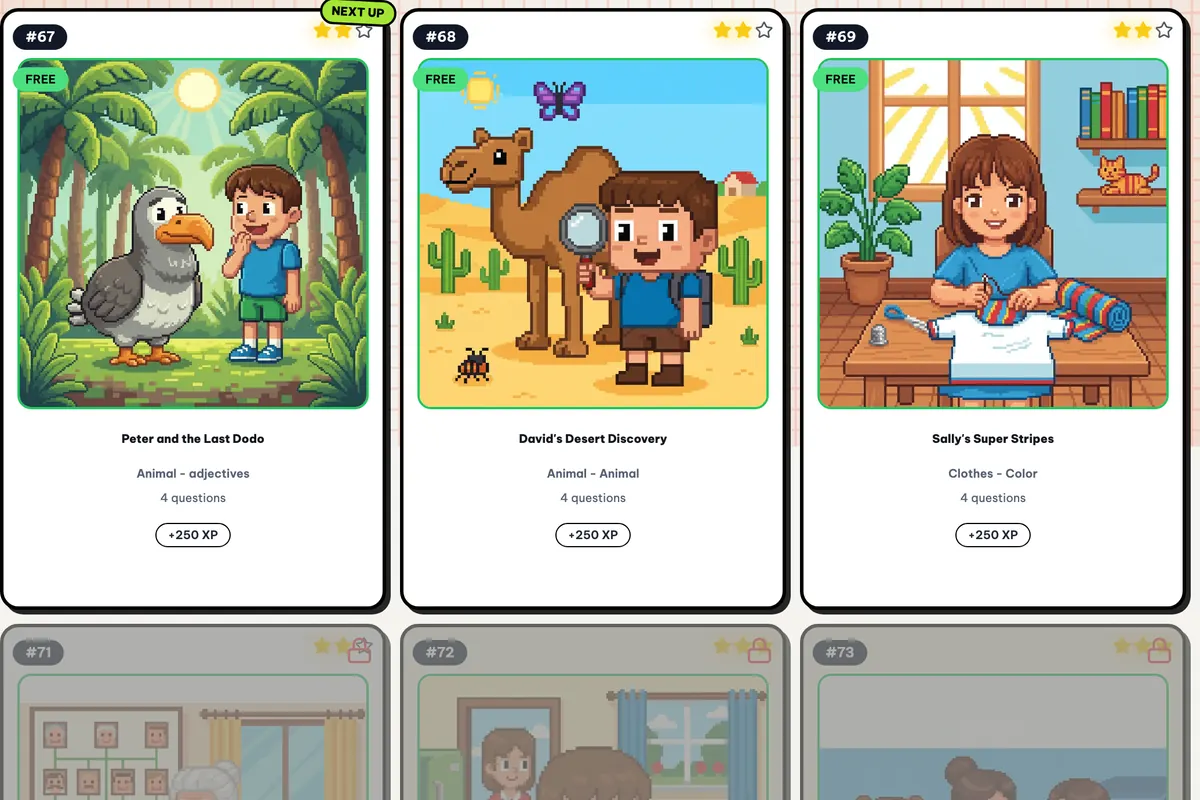
The Reading & Writing paper is 30 minutes with 6 parts and 35 questions. Part 2 asks your child to choose the right responses in a conversation, Parts 3 and 4 are gap-fill texts, and Part 5 is a three-part story with sentence-completion questions. Regular story reading builds the stamina these longer texts need.
Multi-part stories with completion questions — the same shape as Reading & Writing Part 5.
Choose the right reply in a short conversation — direct practice for Part 2.
Three-option gap fills at Movers grammar level, just like Part 4.
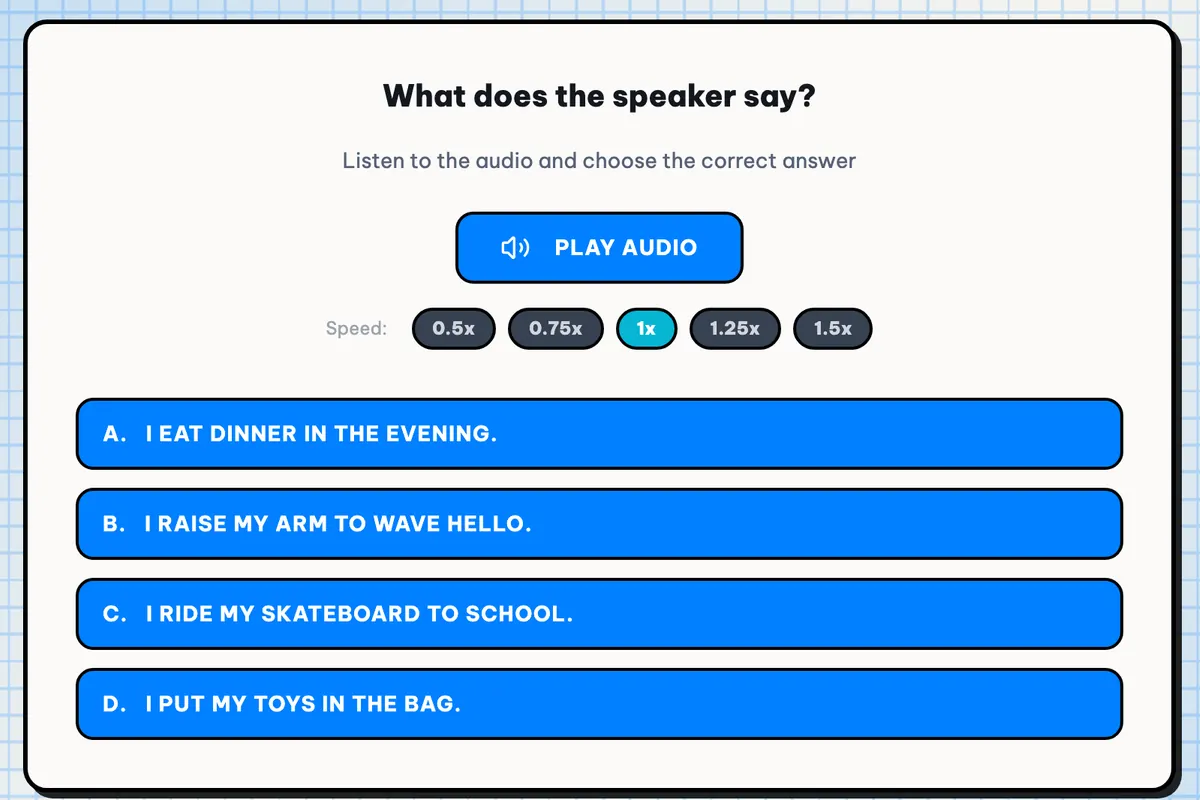
Movers Listening runs about 25 minutes with 5 parts and 25 questions: matching names to people, filling gaps on a form, matching picture sets, three-option picture questions, and a colour-and-write task. Everything is heard twice, so steady daily listening practice pays off quickly.
Arcade-style ear training tuned to Movers words, names and numbers.
Listen and pick the right picture — the skill behind Listening Parts 1, 3 and 4.
Follow a dialogue and match what you hear, like the matching tasks in Parts 1 and 3.
Movers is the first level where children write real answers: Reading & Writing Part 5 asks them to complete sentences about a story using one to three words, and Part 6 mixes sentence completion with answering questions about a picture. Accurate spelling and simple grammar are what earn the marks.
Assemble full Movers sentences word by word so 1–3-word answers come naturally.
Practise the verb forms and connectors that Movers gap-fills love to test.
Written answers must be spelled correctly — build accuracy with quick daily rounds.
Browse every official A1 Movers word with pictures, audio and games. The full official wordlist is organised by topic, so revision can target exactly the words your child hasn't met yet.
Browse the Movers wordlistOr browse the wordlist by topic
Movers is typically taken between ages 8 and 11, usually a year or two after Starters. There's no official age limit — what matters is that your child can read and write simple English sentences and follow short conversations. Many schools schedule Movers in the middle years of primary school.
It depends on the starting point. A child already comfortable at Starters level usually needs around three to six months of regular practice — 15 minutes of games a day plus a weekly practice test works well. Children starting from little English should plan for a longer, gentler runway.
None — there is no pass mark, and no child fails. Each of the three papers earns up to five shields, 15 in total. Around 10–11 shields is generally seen as a strong result and a good sign your child is ready to begin preparing for A2 Flyers.
About an hour of testing in total: Listening is around 25 minutes with 25 questions, Reading & Writing is 30 minutes with 35 questions, and Speaking is a 5–7 minute one-to-one conversation with an examiner. The papers are short on purpose, to suit children's attention spans.
Yes. The three Cambridge Young Learners tests are independent, so no previous certificate is required. If your child already reads and writes simple English sentences comfortably, starting at Movers is common. If they're still matching words to pictures, beginning with Starters builds confidence first.
Yes. Movers is aligned with CEFR level A1, meaning a child can understand and use everyday expressions and very basic phrases. It sits between Pre-A1 Starters and A2 Flyers on the Cambridge ladder, and a strong Movers result is the natural springboard to Flyers preparation.
Movers is a real step up: more parts and questions per paper, longer texts, and genuine writing — children complete sentences using one to three words rather than just spelling single words. The wordlist grows too, adding topics like school, health, weather and travel to the Starters base.
The games on this page cover Movers vocabulary, reading, listening, grammar and writing, and they're free to start. Short daily sessions beat weekend cramming: try one listening game and one word game a day, then check the progress dashboard to see which topics need another pass.
Last updated: 2026-07-01
Create a free account and your child can start playing Movers vocabulary, reading, listening and grammar games in under a minute — no card required.
Last updated: 2026-07-01