A1 Movers Listening Part 4 — Three-Picture Multiple Choice
Movers Listening Part 4 plays five short conversations. After each one, your child reads a question and ticks the right picture from three options (A, B or C). The wrong pictures are usually mentioned too.
How Movers Listening Part 4 works
Your child reads the first printed question and looks at its three pictures: A, B and C.
A short conversation plays; usually every picture gets mentioned, but only one answers the question.
Your child ticks the box under the correct picture.
The clip plays again for confirmation, then the test moves on — five separate conversations in all.
Tips to prepare for Part 4
Read the question first, always — it tells your child exactly what to listen for before the conversation starts.
Expect all three pictures to be mentioned. The first one named is usually bait; the real answer often arrives after a correction like 'no, actually…'.
Decide on the first listen and verify on the second — leaving every tick until the repeat playing invites panic.
Practise the question words — what, where, which, who — because a child who has misread the question can't be saved by good listening.






Practise Part 4 with these games
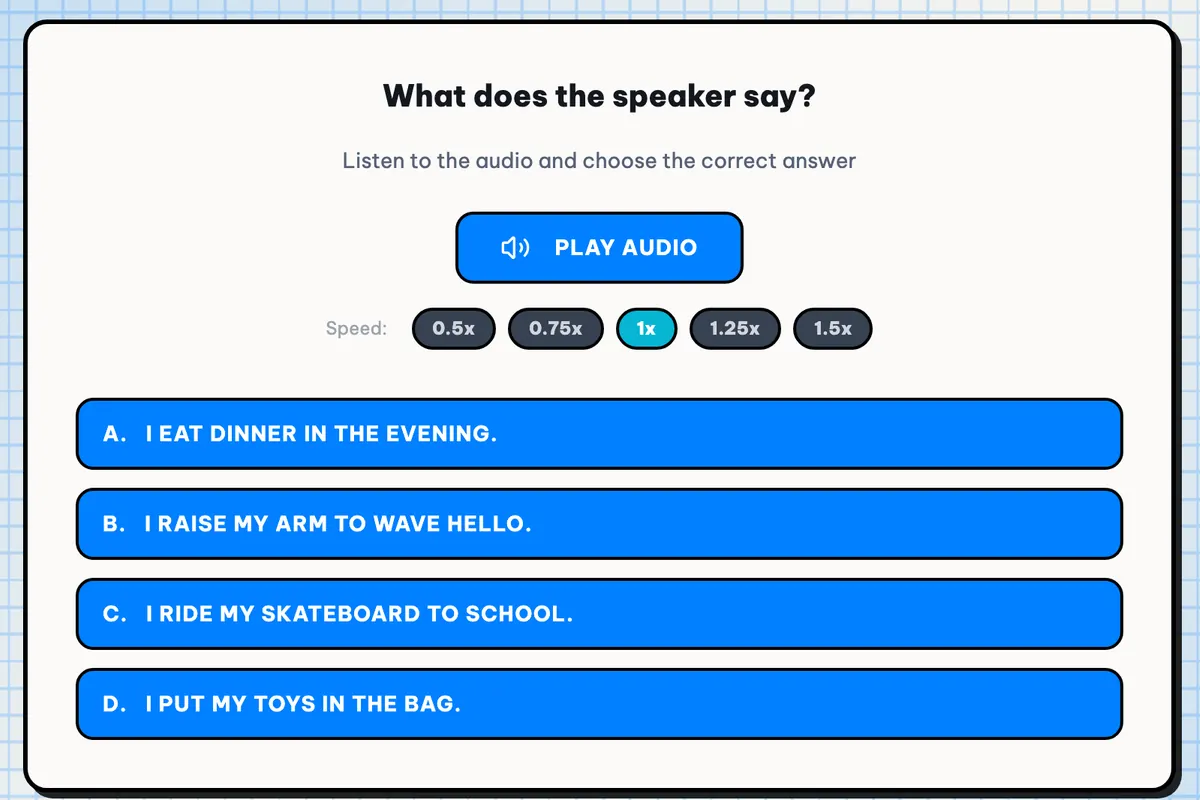
- Listening MCQ
Short audio clips with A/B/C choices — the same format as Part 4's five conversations.
- Listen & Choose
Extra practice choosing between similar pictures after hearing a short clip.
Frequently asked questions
What happens in Movers Listening Part 4?
Your child hears five separate short conversations. Before each one, they read a printed question — for example, 'What did Jim have for dinner?' — and see three pictures labelled A, B and C. They tick the box under the picture that answers the question. Each conversation is played twice.
Why does my child pick a picture that was mentioned but wrong?
Because Part 4 is designed that way: all three pictures are usually mentioned somewhere in the conversation, and the first thing named is often a distractor. The skill is holding back until the conversation finishes — the correct answer frequently comes after a 'no, actually…' turn near the end.
Is any reading needed in Listening Part 4?
A little. Each question is printed above its three pictures, and children have a short pause to read it before the audio starts. Practising quick reading of simple wh-questions — who, what, where, when — means your child starts each conversation already knowing what to listen for.
Last updated: 2026-07-02
Ready to practise Listening Part 4?
Make a free account and your child can start in under a minute. No card needed.